

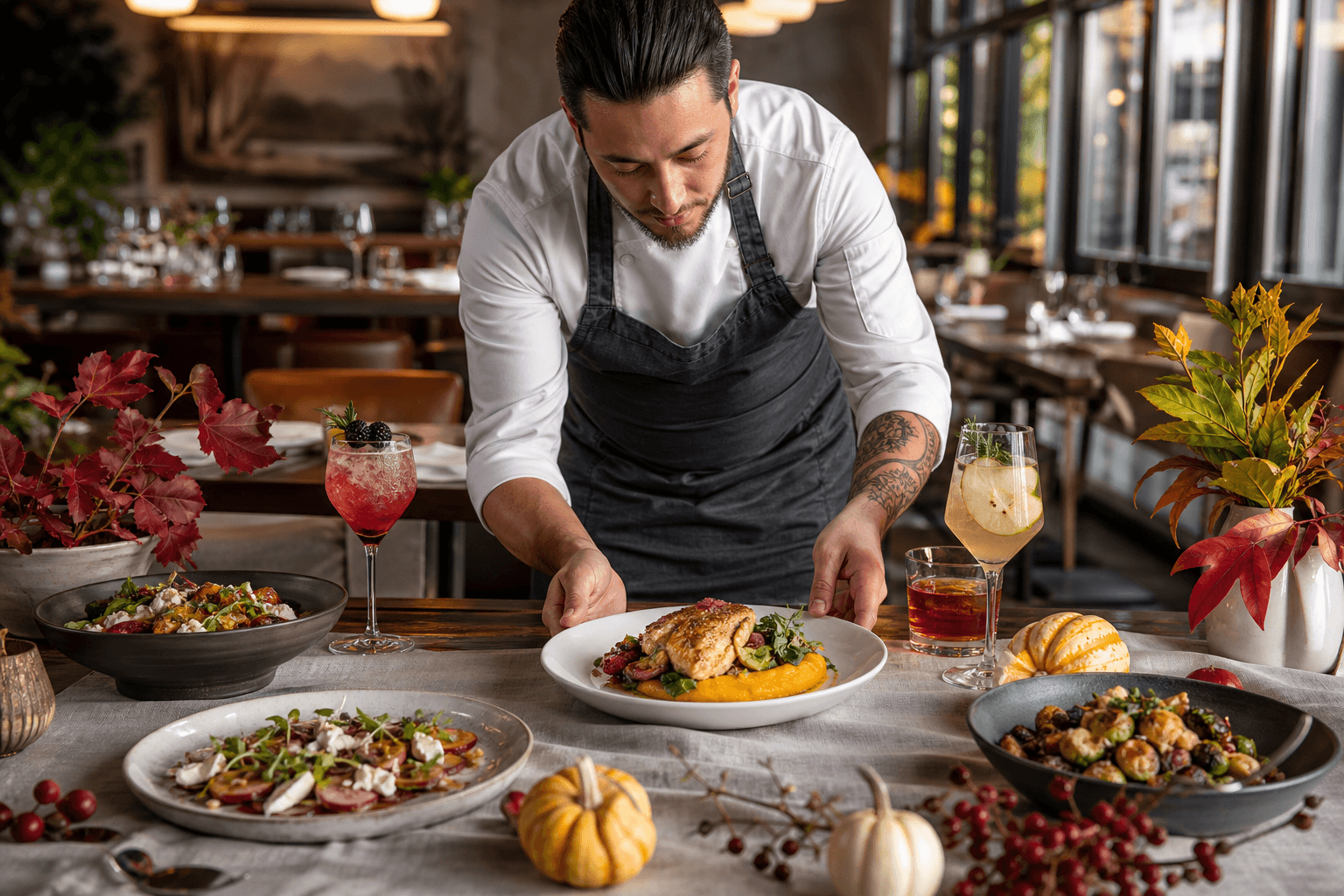
Seasonal restaurant photography should capture more than the new dish. A useful campaign combines priority food and drink images with the atmosphere, people, décor, service moments, and formats needed for the promotion’s actual channels. Schedule the shoot after the menu and offer are settled, with enough time for styling, editing, approvals, and publishing before launch. Related reading: Restaurants.
Seasonal restaurant photography starts with the campaign, not the camera
Restaurant photography for seasonal campaigns is a coordinated set of images and, where useful, video created for a specific menu change, holiday promotion, event, patio launch, or time-limited offer. Begin with the business objective, audience, offer, launch date, and publishing channels.
A new summer patio menu may need hero dishes, drinks, patio atmosphere, staff service moments, and vertical content. A limited-time dessert may need only focused food images, close-up details, and a short promotional clip.
- What is changing? Identify the menu, setting, service, event, or offer that needs attention.
- Who is the campaign for? A family brunch, date-night menu, takeout offer, and chef-led event each need different visual emphasis.
- What should customers do? They may need to view a menu, reserve a table, order a seasonal item, attend an event, or visit during a particular period.
- When does the message expire? Note the final service date, holiday, event, or menu change so the assets are planned for the right campaign window.
- Where will the content appear? List the channels before production so orientation, crops, and deliverables can be planned.
A first session does not need to cover the entire menu. Prioritising signature, seasonal, newly launched, chef-recommended, or strategically important dishes usually creates a more useful campaign than photographing every item without a publishing plan. For practical guidance on selecting dishes and planning formats, review these restaurant photography ideas.
Which seasonal moments deserve dedicated restaurant photography?
Commission dedicated imagery when the offer, setting, audience, or visual identity changes enough that existing photos no longer explain the experience accurately. If only the caption, price, or publication date changes, evergreen imagery may be sufficient.
| Seasonal moment | Dedicated imagery is useful when | Possible visual priorities |
|---|---|---|
| Spring menu or brunch launch | New dishes, lighter styling, or a new daytime occasion is being promoted | Fresh dishes, coffee, brunch service, staff interaction, bright dining areas |
| Summer patio campaign | The patio, outdoor service, drinks, or warm-weather experience is part of the offer | Patio seating, beverages, shared plates, exterior details, service moments |
| Autumn menu refresh | Seasonal ingredients, comfort dishes, décor, or an evening mood changes | Hero dishes, textures, warm surfaces, table settings, interior atmosphere |
| Winter and holiday promotion | The restaurant has a holiday menu, private event, gift offer, or seasonal décor | Sharing dishes, drinks, décor, table details, group dining, event atmosphere |
| Valentine’s Day or date-night offer | The campaign depends on mood, reservations, a set menu, or a specific dining experience | Plated courses, paired drinks, intimate tables, service gestures, low-light ambience |
| Chef collaboration or special event | The people, process, or limited availability are central to the promotion | Chef portraits, preparation, ingredients, event details, guests where permissions allow |
| Limited-time dish or drink | The item will not be represented accurately by an existing menu image | Hero image, ingredient details, serving context, close-up and social crops |
Use a simple test: if the customer’s reason to visit changes, the visual story probably needs to change as well. If the restaurant is promoting the same core experience with a new caption, a full seasonal shoot may be unnecessary.
Evergreen images and seasonal campaign assets do different jobs
Evergreen restaurant images explain the core brand and remain useful across several months. Seasonal campaign assets create urgency or show something that will disappear, change, or look different after the promotion ends.
| Evergreen assets | Seasonal campaign assets | Planning decision |
|---|---|---|
| Signature dishes that stay on the menu | Limited-time dishes or seasonal presentations | Keep the signature image consistent and refresh only the changing item |
| Core drinks, service details, and brand textures | Seasonal cocktails, garnishes, or hot drinks | Use the same visual language while changing timely details |
| Dining room, exterior, and recognisable brand elements | Holiday décor, patio setup, or weather-specific atmosphere | Update the setting when it changes the customer experience |
| General staff and hospitality moments | Chef collaboration, event service, or seasonal team activity | Plan people-led images when the occasion is part of the offer |
| General food and brand details | Specific campaign props, packaging, menus, or event details | Use temporary props selectively so images remain useful during the campaign |
The strongest visual system combines both. Evergreen assets provide a stable foundation, while seasonal images show why the current promotion deserves attention. Plan the evergreen library as a reusable base and the seasonal set as a dated campaign layer, with separate approval and retirement dates.
Choose the lead format by the campaign goal
Food photography should lead a menu or limited-time offer campaign because it identifies exactly what customers can order. Interior and ambience photography should lead an experience campaign, while staff imagery supports hospitality, events, and brand stories. Short-form video earns its place when movement, preparation, energy, or atmosphere matters.
Food photography
Choose food photography when customers need to recognise a dish, understand its ingredients or presentation, or decide whether it fits the offer. Use hero images for the main promotion and supporting close-ups to show texture, layers, garnish, or serving context.
Interior and ambience photography
Choose interior imagery when the setting is part of the reason to visit. A patio launch, private dining promotion, holiday setup, or date-night campaign needs more than a plate on a plain surface. It needs to show where the experience happens.
For campaigns where the room carries the message, plan a separate atmosphere-focused set covering the dining room, lighting, seating, details, and relationship between guests and space. This aligns with restaurant interior and ambience photography.
Staff, chef, and guest moments
Use staff or chef imagery when the campaign depends on service, craft, personality, or a special event. Guest images can communicate energy and occasion, but permissions and timing need to be planned before the shoot.
Vertical content and short-form video
Vertical stills and video suit mobile-first campaign placements, especially when the first few seconds need to show a dish, pour, preparation step, or atmosphere. Stills identify the offer clearly; video can show movement, process, energy, or a sequence of moments.
360-degree imagery, drone imagery, and virtual staging
These formats are usually peripheral to a seasonal restaurant campaign. A 360-degree view may help if the campaign is specifically about the venue or private events. Drone imagery may have limited value unless the property, patio, destination setting, or event requires an exterior establishing view.
Virtual staging is generally a poor fit for food and hospitality promotions because authentic dishes, décor, staff, and service are the subject.
Match deliverables to where customers will see them
Each channel asks a different question. A menu image identifies the dish, a website banner establishes the campaign mood, a social clip stops the scroll, and an email image supports the offer. Treat the following as planning options to confirm in the brief, not automatically included deliverables.
| Potential use | Useful format | Question the asset should answer |
|---|---|---|
| Printed or digital menu | Clear landscape, portrait, or square dish image | What is this item, and what does it look like? |
| Restaurant website | Landscape hero image plus supporting food and atmosphere images | What is being offered, and what will visiting feel like? |
| Delivery platform | Accurate dish image with a clear crop and minimal distractions | What will arrive, and which item should I choose? |
| Social media | Vertical stills, square crops, close-ups, and short-form video | Why should I notice this offer now? |
| Email promotion | Hero image with supporting detail or atmosphere image | What is the promotion, and what action should I take? |
| Google Business Profile | Current food, exterior, interior, and experience images | What does this restaurant offer, and what does it look like today? |
| In-venue promotion | High-resolution images for signage, table cards, screens, or displays | What should an existing guest try or book next? |
Tell the photographer every intended use before the shoot. Portrait, landscape, close-up, and vertical requirements affect composition, so one image may not serve every channel well. Confirm file dimensions, delivery formats, usage rights, and whether video editing is included.
Build a seasonal shot list that sells both the food and the visit
A practical seasonal shot list begins with the campaign’s priority item and expands to details that help customers imagine ordering, arriving, sitting, sharing, and returning.
- Hero seasonal dishes: Photograph the limited-time item, signature seasonal plate, chef recommendation, or featured combination in its intended presentation.
- Supporting food details: Capture ingredients, texture, layers, garnish, sauces, pouring, slicing, or serving context.
- Drinks and desserts: Include seasonal cocktails, coffee, hot drinks, desserts, pairings, glassware, and occasion details.
- Dining room and décor: Show tables, lighting, seasonal details, signage, and spatial atmosphere.
- Patio and exterior: Capture seating, shade, views, entry details, service flow, and the relationship between patio and restaurant.
- Chef and staff: Include preparation, plating, service, or collaboration moments when people and craft are central.
- Takeout and packaging: Add packaging, handoff, or travel-ready presentation when takeaway or delivery is part of the offer.
- Guests and event details: Use hands, shared plates, table settings, activities, or identifiable guests only when permissions and timing are arranged.
- Adaptable details: Request clean crops and brand details for banners, email headers, social posts, or in-venue materials.
Hypothetical example: A restaurant launching a summer patio menu might prioritise two hero dishes, one shared plate, three drinks, a patio wide shot, a table-level atmosphere frame, a server placing a drink, and vertical clips of pouring and plating. Schedule the food and patio images early enough that the finished assets are approved before the first warm-weather promotion begins.
Style seasonal visuals without losing the restaurant’s identity
Seasonal styling works best when it changes the context without disguising the restaurant. Use the brand’s existing colour, light, surfaces, plating language, glassware, and composition as the foundation, then introduce seasonal cues through ingredients, restrained props, décor, or the setting.
A winter campaign may use warm light, deeper surfaces, steam, sharing dishes, or restrained holiday details. A summer campaign may use natural light, brighter surfaces, cold drinks, outdoor seating, and open space.
There is a useful trade-off between recognisable seasonal props and longer-term value. A specific holiday setup creates urgency but becomes dated quickly. A seasonal ingredient, table detail, colour accent, or patio scene may communicate the moment while remaining useful for more of the campaign window.
Coordinate plating, dish timing, props, glassware, wardrobe, and background activity with the kitchen and front-of-house team. Food should be presented as intended to be served, and hot items, equipment, and service areas should be handled by the restaurant team safely during styling and capture.
Turn one seasonal production session into a launch asset library
A seasonal shoot becomes more useful when every capture has a job in the launch calendar. Build the session around one lead offer, then reserve time for the supporting images, atmosphere, people, and motion that will carry the campaign from announcement through its final service date.
- A hero dish image for the menu, website, email, and main promotion.
- Close-up food and drink details for supporting posts and menu sections.
- Portrait and vertical compositions for mobile-first placements.
- Landscape atmosphere images for a website banner or email header.
- Patio, dining room, décor, or exterior frames that explain the experience.
- Staff, chef, preparation, or service moments that add a human story.
- Short promotional video showing movement, process, energy, or ambience.
- Clean adaptable details for in-venue materials or future campaign variations.
Assign each asset to a publication date before the shoot, including the announcement, launch day, mid-campaign reminder, and final availability notice. More ideas for combining food, atmosphere, and motion are available in this guide to restaurant photography planning.
Schedule the campaign backwards from the first publication date
There is no reliable fixed session length for every restaurant campaign. Production time depends on the number of dishes, styling changes, people, spaces, formats, video requirements, kitchen coordination, editing scope, and approvals.
- Set the objective and launch date. Decide what customers should notice and do.
- Finalise the menu or offer. Do not build the shot list around dishes that may change.
- Choose priority items and channels. Separate must-have assets from optional extras.
- Develop the visual direction. Agree on mood, surfaces, colour, props, lighting, décor, and references.
- Confirm the people and space. Coordinate kitchen timing, staff availability, patio readiness, access, permissions, and service disruption.
- Prepare the shoot. Assign styling responsibilities, gather props and packaging, clean the space, and confirm dish presentation.
- Capture the assets. Photograph lead items first, then supporting details, atmosphere, people, and video.
- Edit and review for accuracy. Check that images represent the menu, presentation, setting, and offer honestly.
- Approve and publish. Leave time for final review of crops, captions, file types, and placements.
Work backwards from the first publication date and allow a separate approval window before the offer begins. When requesting a quote, provide the restaurant address, campaign date, menu status, number of priority items, spaces to photograph, people involved, intended channels, and desired deliverables.
Use this restaurant seasonal campaign brief before you book
Copy, complete, and send this brief to a photographer or content partner:
Campaign objective: (what this campaign needs to promote or explain)
Audience: (who we want to reach)
Offer or occasion: (seasonal menu, holiday, event, patio launch, limited-time item, or other promotion)
Launch date: (date the first asset will be published)
Featured dishes and drinks: (priority items and confirmed presentation details)
Must-show details: (ingredients, texture, portion, packaging, décor, patio, service, or event elements)
Visual direction: (mood, lighting, surfaces, colours, composition, and reference examples)
Brand requirements: (brand colours, tableware, uniforms, typography, or visual elements to preserve)
People and permissions: (chef, staff, guests, hands-only images, releases, or other requirements)
Locations: (kitchen, dining room, patio, exterior, bar, private room, or other spaces)
Channels: (menu, website, delivery platform, social media, email, Google Business Profile, in-venue promotion, or other use)
Orientation and crops: (portrait, landscape, square, vertical, close-up, banner, or other requirements)
Video needs: (none, preparation, pouring, service, atmosphere, interview, or short-form promotional video)
Approval contact: (name and role of the final decision-maker)
Usage questions: (where the assets will appear, for how long, and whether paid promotion is planned)
Delivery deadline: (date the approved files are needed)
Pre-shoot checks
- Confirm that the menu, prices, ingredients, and presentation are settled enough to photograph.
- Decide who is responsible for plating, styling, props, tableware, décor, and space preparation.
- Schedule the kitchen, chef, staff, patio, and participating guests or collaborators.
- Prepare packaging and service details if takeaway or delivery is part of the offer.
- Confirm permissions for identifiable people, music or branded materials appearing in video, and third-party elements.
- Choose one person to approve the final images and confirm the review deadline.
When professional seasonal restaurant photography is the right next step
Your campaign is ready for a focused shoot when the offer is clear, priority items are confirmed, the launch date is known, and the restaurant can describe where each asset will be used. If those decisions are still moving, settle the brief first.
If you are ready to scope a seasonal menu or promotional content shoot, review Silver Valley Studios Inc.’s photography services and request a scope that matches your menu, setting, channels, and launch date.