

Last updated: October 2026
Key takeaway:Real estate videography services create professional listing videos that show a property’s layout, features, and setting through planned filming and editing. For Maple Ridge and surrounding BC markets, the most useful package usually combines a primary walkthrough with selected vertical clips, still photography, accurate 2D floorplans, and drone coverage when the property and flight conditions justify it.
By Sumeet S., Founder & CEO, Silver Valley Studios Inc.
Last updated: 2026-06-04
What real estate videography services include
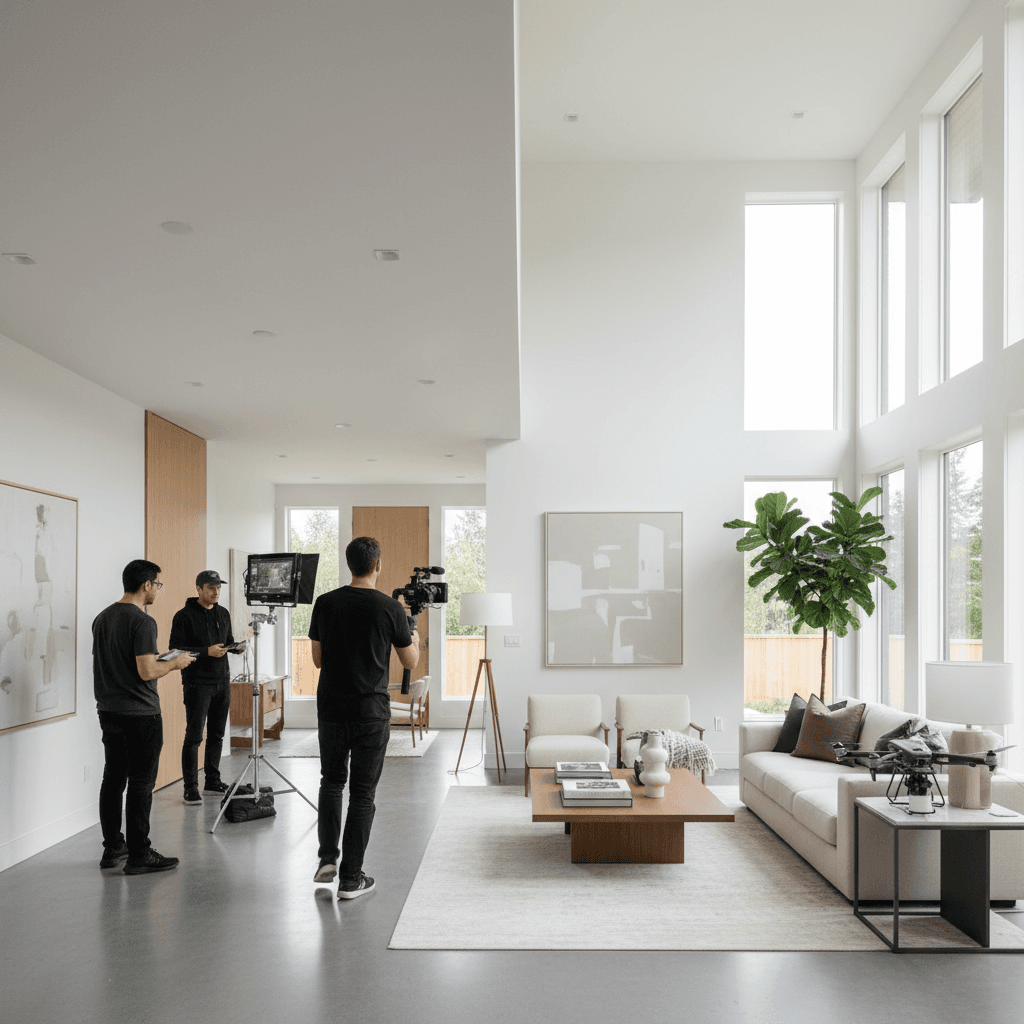
Real estate videography services cover more than recording a camera moving through a home. They include planning the viewing sequence, preparing the property, capturing stable interior and exterior footage, editing a clear story, and delivering files suited to the listing platforms and social channels where buyers will see them.
Silver Valley Studios Inc. is based in Maple Ridge and produces real estate media for property listings and developments across British Columbia. The business combines professional photos, cinematic video tours, 2D floorplans, vertical videos, and drone coverage so the individual assets support one another rather than presenting conflicting views of the property.
- Plan the audience, priorities, access, staging, and delivery formats.
- Film the property in a logical sequence that communicates movement and scale.
- Edit a primary listing video and, where useful, shorter social versions.
- Coordinate video with photos, floorplans, and aerial context.
- Deliver practical files for MLS, websites, Instagram, TikTok, and other approved channels.
Review the studio’s real estate media services to see how video fits with its broader property-marketing offering.
What is real estate videography?
Real estate videography is the planned capture and post-production of moving images for a property listing. A finished tour may include stabilized room-to-room movement, detail shots, exterior footage, ambient sound or music, captions, narration, agent presentation, and aerial views. The right combination depends on the home, the intended buyer, and the way the video will be used.
A useful listing video answers practical questions quickly: How do the rooms connect? Is the living area bright and proportionate? How does the home relate to its yard, street, views, or surrounding landscape? A good edit creates interest without hiding information behind excessive transitions or overly fast cuts.
Core elements of a listing video
- Stabilized walkthroughs: Smooth movement helps viewers understand the relationship between rooms and levels.
- Detail footage: Close views can draw attention to finishes, storage, fixtures, appliances, and outdoor features.
- Exterior context: Street-level and aerial shots can establish the lot, architecture, yard, or surrounding setting.
- Captions and titling: Short on-screen cues make the edit easier to follow when viewers watch without sound.
- Voiceover or agent-led presentation: Narration is useful when a layout, feature, or selling point needs explanation.
- Consistent branding: Intro, lower-third, and end-card treatments should support the agent or brokerage without overpowering the property.
Before booking, decide whether your priority is explaining flow, presenting a lifestyle, introducing a luxury finish package, or creating social attention. That decision determines the shot list and prevents a generic video from trying to serve every purpose at once.
Why use video in real estate media?
Photos let a buyer inspect individual rooms, while video adds sequence, movement, and a sense of how the spaces connect. Floorplans add another layer of understanding by showing relationships that are difficult to communicate through isolated images. Used together, these formats help viewers decide whether a property deserves closer attention.
Video is particularly useful when the home has a complicated layout, strong indoor-outdoor flow, distinctive architecture, scenic surroundings, or features that are easier to understand in motion. It can also give an agent a reusable presentation asset for a listing page, email, social post, or buyer conversation.
When video is most useful
- Multi-level homes: A planned route can explain stairs, bedrooms, living areas, and transitions more clearly than a gallery.
- Townhomes and condos: Movement can show entry sequence, amenity access, balconies, and compact layouts.
- Scenic or lifestyle properties: Exterior footage can connect the home with its yard, views, greenspace, or setting.
- New or renovated homes: A controlled edit can present finishes and systems in a consistent visual style.
- Listings with a short marketing window: A coordinated set of assets gives prospective buyers several ways to understand the property quickly.
Video is not a substitute for accurate listing information or well-composed photographs. It should show the property honestly and make the next decision easier: save the listing, request more information, or book a showing.
How real estate videography services work
A defined workflow reduces missed rooms, inconsistent lighting, and avoidable delays. Silver Valley Studios structures a typical project around discovery, preparation, capture, editing, review, and delivery, with the exact schedule adjusted for property size and production requirements.
- Discovery and goals: Confirm the property type, audience, must-show features, preferred tone, branding, access, and intended destinations such as MLS or social media.
- Property preparation: Complete staging, decluttering, lighting, access, parking, pet, and occupancy checks before the crew arrives. A prepared home gives the camera more useful options.
- Shot list and route: Establish the opening image, room order, transitions, detail priorities, exterior coverage, and any narration or agent segments.
- On-site capture: Film stabilized walkthroughs, locked-off views, details, ambient sound, and exterior scenes. A standard single-family shoot may take about 60–120 minutes on site, while larger or more complex properties may need longer.
- Editing and finishing: Shape the footage into a clear sequence, balance colour, refine sound, add captions or branding where requested, and remove footage that does not support the story.
- Review: A preview allows the client to identify factual corrections, branding changes, or missing priorities before final delivery.
- Delivery and reuse: Provide the agreed master and any requested social versions, thumbnails, or vertical edits in formats suited to their destinations.
How to prepare a property before filming
- Remove personal items, loose cables, bins, and unnecessary countertop objects.
- Open suitable blinds and curtains, replace failed bulbs, and turn on practical lighting.
- Complete repairs and finishing work before the shoot rather than relying on editing.
- Make beds, align furniture, clear outdoor areas, and prepare seasonal features honestly.
- Plan for pets, occupants, contractors, and showings so the crew can capture uninterrupted takes.
Preparation is especially important for occupied homes and active listings. A short pause in showings can make the capture more efficient and gives the editor cleaner transitions between rooms.
Which property video format should you choose?
The best format depends on the question the video must answer. A cinematic walkthrough is usually the strongest general-purpose anchor, while agent-led, narrated, drone, and vertical formats work as targeted additions rather than automatic requirements.
| Format | Best use | Typical role | Decision guidance |
|---|---|---|---|
| Cinematic walkthrough | Showing flow, finishes, and overall atmosphere | Primary listing video | Choose it when the property benefits from a polished, visual-first presentation. |
| Agent-led tour | Explaining features and building personal trust | Primary or supporting video | Use it when the agent can add useful context or the layout needs guided explanation. |
| Voiceover tour | Adding information without an on-camera host | Primary or supporting video | Use a concise script when narration clarifies features that visuals alone cannot explain. |
| Drone footage | Showing lot, architecture, views, and surroundings | Opening, closing, or short insert | Include it when exterior context adds value and the flight can be conducted lawfully and safely. |
| Vertical social clips | Short-form discovery and social distribution | Supporting edits | Cut focused clips around a room, feature, transition, or exterior moment rather than shrinking the whole tour. |
A practical package structure
For many listings, start with one coherent primary walkthrough and add only the supporting cuts that have a clear job. Two or more short vertical clips can highlight a kitchen, view, outdoor area, or unusual layout. A drone opening can establish a rural or scenic property, while an agent-led segment may be more valuable than aerial footage for a complex townhome.
Do not choose a format only because it is fashionable. A compact condo may need excellent interior sequencing and photos more than a long aerial edit; an acreage property may benefit substantially from exterior context and a clear route through the land.
Best practices for useful listing videos
Effective real estate video is clear before it is flashy. Viewers should understand what they are seeing, where they are in the property, and why the next scene follows the previous one.
Build the opening around the property
Open with a strong but accurate visual: a main living space, exterior approach, view, architectural feature, or useful room transition. Avoid spending the opening seconds on a long logo animation. The first scene should establish the property’s strongest reason to keep watching.
Keep movement intentional
Move through rooms at a pace that preserves scale and orientation. Doorway reveals can explain flow, but constant motion can make a home feel smaller or harder to assess. Hold long enough on important spaces for viewers to notice windows, circulation, storage, and fixed features.
Edit for sound-off and sound-on viewing
Music, room tone, and narration should support the visuals rather than compete with them. Captions and concise on-screen labels help when sound is disabled, particularly for vertical social clips. Any spoken or written claim should be accurate and consistent with the listing information.
Protect visual consistency
Keep colour, brightness, camera height, and branding consistent across the master and supporting cuts. A coordinated appearance matters when a buyer moves from a video to photos or a floorplan. It also gives the agent a reusable body of media that feels like one campaign.
Show the property honestly
Wide lenses, camera movement, and editing can improve presentation, but they should not create a misleading impression of room size or condition. Include relevant transitions and use detail footage to explain, not conceal, the property’s actual characteristics.
Production tools that support the result
Professional equipment helps a crew work consistently, but equipment alone does not create a useful listing video. The important question is whether each tool improves stability, exposure, sound, continuity, or delivery reliability.
- Camera and lenses: A suitable camera body and interior-friendly lens choices help capture rooms without losing important context.
- Gimbal and tripod: Stabilization supports smooth walkthroughs, while a tripod provides controlled detail and exterior shots.
- Exposure control: Filters and careful exposure protect window views and reduce distracting brightness changes.
- Portable lighting: Soft, adjustable lighting can support dark areas while preserving the home’s natural character.
- Audio equipment: Microphones and room-tone recording matter for agent-led tours, narration, and natural-sounding edits.
- Editing and colour workflow: Consistent finishing helps footage from different rooms and times of day feel connected.
- Delivery formats: Masters, web files, vertical crops, captions, and thumbnails should be agreed before production.
For a broader view of the studio’s work across listing and brand projects, visit the portfolio of completed visual projects.

How video, photos, floorplans, and drone work together
Each media type answers a different buyer question. Video communicates sequence and atmosphere; photographs allow detailed inspection; a 2D floorplan explains relationships and dimensions; drone footage provides exterior context. The campaign is strongest when the same priorities, visual tone, and property facts appear across the set.
Use each asset for its strongest job
- Video: Show entry, movement, transitions, lifestyle, and the overall experience of the property.
- Photos: Give buyers time to study finishes, appliances, storage, views, and room details.
- 2D floorplans: Clarify room arrangement, levels, access points, and circulation.
- Drone: Establish the lot, roofline, nearby landscape, or relationship to the surrounding area when relevant.
- Vertical clips: Create focused entry points for social audiences and direct them toward the fuller listing.
A shared shot list helps the photo and video teams prioritize the same features. It also reduces the risk that the video emphasizes one room while the photos or floorplan tell a different story. Before publication, check names, room order, feature descriptions, and exterior views for consistency.
Planning real estate media in Maple Ridge and BC
Maple Ridge properties can range from compact homes and townhomes to larger lots with meaningful outdoor context. That variety affects the route, the amount of exterior coverage, the value of aerial footage, and the time needed to prepare the property.
Schedule exterior work around daylight, wind, visibility, and the property’s best seasonal qualities. Spring and early fall can support attractive outdoor presentation, while winter shoots may benefit from a stronger interior emphasis and warm practical lighting. The right timing is the one that shows the home accurately and gives the crew a workable production window.
Silver Valley Studios serves communities including Abbotsford, Mission, Chilliwack, Langley, Maple Ridge, Surrey, Coquitlam, Burnaby, and Richmond, as well as broader Greater Vancouver and Vancouver Island projects. Confirm travel, access, parking, turnaround expectations, and deliverables when planning a regional listing campaign.
Drone and privacy considerations
Drone footage should be planned as part of the production rather than assumed to be available at every property. Weather, visibility, location, operating conditions, nearby people, and applicable Transport Canada requirements can affect whether aerial filming is appropriate. Review the Transport Canada privacy guidance for drone operators before a shoot involving neighbouring properties or people.
Ask the production team how it evaluates the proposed flight, manages privacy, and handles a change in plan if wind or other conditions make aerial work unsuitable. A safe street-level exterior is preferable to forcing an aerial shot that adds little value or creates unnecessary risk.

How to choose a real estate videography provider
Compare providers by the clarity of their process, not only by camera specifications or a few highlight clips. A reliable provider should explain what is included, what preparation is expected, how revisions work, and which files will be delivered.
- Ask whether the provider handles planning, filming, editing, and delivery as one workflow.
- Confirm which formats are included and whether vertical or narrated versions are separate deliverables.
- Check how the provider approaches staging, occupied homes, weather, access, and timing.
- Ask how drone feasibility and privacy considerations are assessed before the shoot.
- Confirm the review process, turnaround expectations, file formats, and revision terms.
- Look for examples that resemble your property type and intended audience.
The best fit is the team that can translate your listing goals into a practical shot list and deliver a consistent set of real estate media without making unsupported promises about views, leads, or sale outcomes.
Frequently asked questions
What are real estate videography services?
They are professional planning, filming, editing, and delivery services for property listing videos. Depending on the project, they may include stabilized walkthroughs, detail footage, narration, agent-led presentation, vertical social edits, and drone coverage. The deliverables should be selected around the property and the channels where the listing will appear.
How long does it take to film a listing?
A typical single-family shoot may take about 60–120 minutes on site, including walkthroughs, details, and exterior coverage when conditions permit. Larger homes, complex layouts, occupied properties, agent-led segments, or extensive aerial requirements can take longer. Preparation and access are major factors in keeping the shoot efficient.
Does every listing need drone video?
No. Drone footage is most useful when the lot, architecture, views, yard, or surrounding landscape adds meaningful context. For some condos and dense urban properties, a strong interior walkthrough and carefully chosen street-level exterior may communicate more than an aerial sequence.
Which format works best for MLS and social media?
A polished primary walkthrough is a practical anchor for a listing, while short vertical edits can support social distribution. Agent-led or voiceover versions are useful when a feature or layout needs explanation. Choose the format based on the audience and property rather than automatically ordering every available option.
How should a property be prepared for filming?
Declutter surfaces, hide cords, complete repairs, open suitable window coverings, replace failed bulbs, and prepare outdoor areas. Arrange pets, occupants, contractors, and showings so the crew can work without interruptions. A clean, prepared space gives the camera more composition options and reduces the need to solve avoidable problems in post-production.
Plan your real estate media launch
Real estate videography services are most effective when video has a clear job within a coordinated media plan. Choose the primary format, identify the rooms and features that matter, prepare the property, and decide how photos, 2D floorplans, vertical edits, and drone footage will support the same listing story.
For a Maple Ridge or regional BC property, start with the buyer’s likely questions and the property’s strongest visual evidence. A well-planned, accurate video can make the listing easier to understand while giving agents a flexible asset for MLS, websites, social media, and direct conversations.
Discuss your next listing
Silver Valley Studios Inc. can help plan real estate media for listings and developments across its BC service area. Visit Silver Valley Studios to begin a conversation about your property, timing, and required deliverables.