

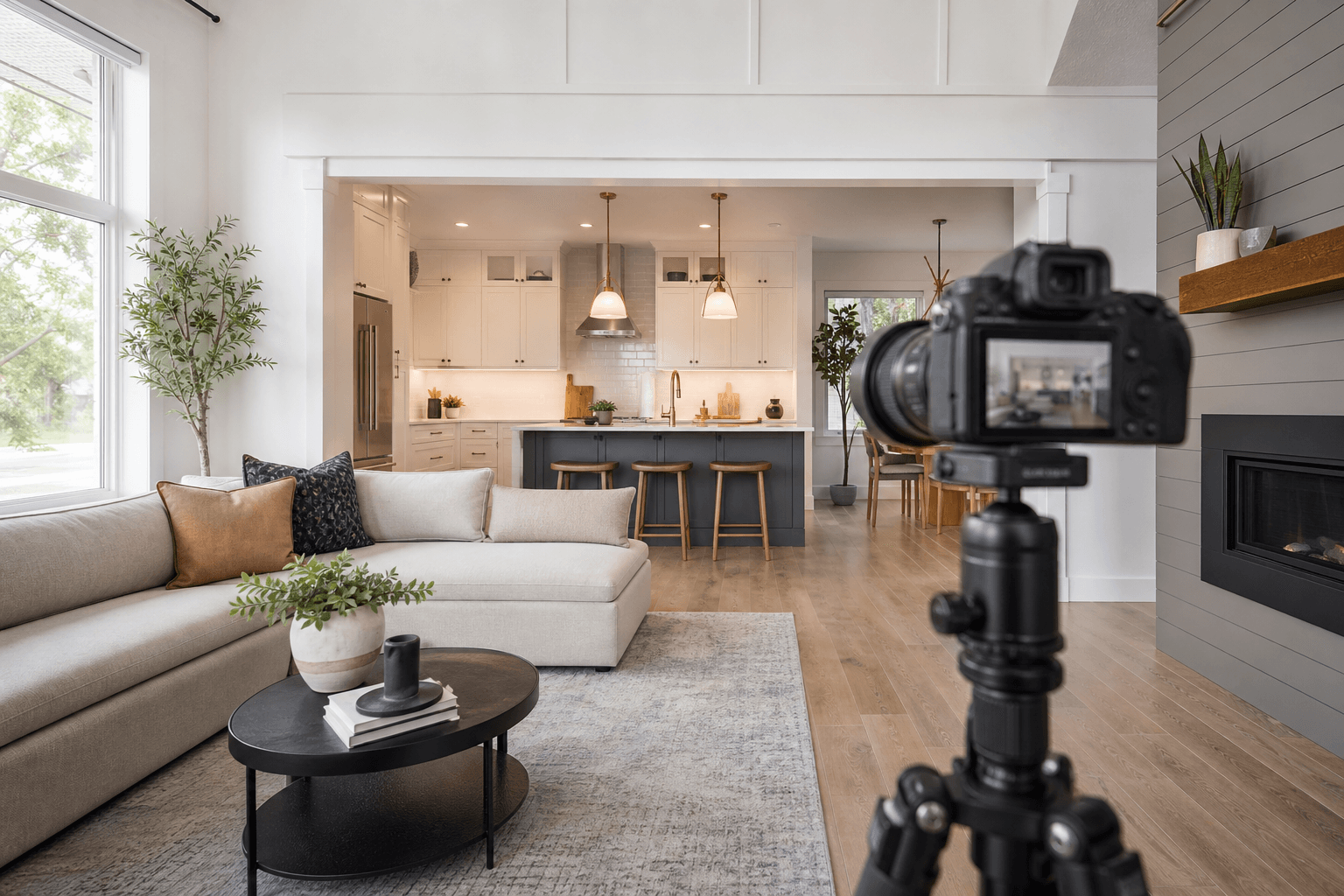
Effective real estate photography starts with accurate, consistent listing photos. From there, video tours, vertical clips, 2D floorplans and drone coverage should be added only when they answer a question that still images cannot answer clearly.
For realtors and real estate teams, the goal is not to collect every possible deliverable. It is to create a visual package that explains the property, reflects its current condition and works across the channels where buyers will see it.
Quick summary

- Confirm the scope, access arrangements, seller preparation and final approver before the appointment.
- Use natural light as a starting point and manage exposure, fill light and colour for believable interiors.
- Keep vertical lines, camera height, colour and room relationships consistent so the property is easy to understand.
- Choose video, floorplans and drone coverage according to the buyer question each format answers.
- Review every file for accuracy, privacy, current condition and publication readiness before it goes live.
1. Confirm the scope, access and property preparation before shoot day
“Real estate photography” may mean still images only, or it may include a wider media assignment. Before booking, decide whether the listing needs HDR photos, a property video tour, vertical social clips, 2D floorplans, drone coverage or a combination of these formats.
Confirm the address, property type, occupied spaces, priority features and intended publication date. Identify who will provide access and who has authority to approve changes to the shot list. The listing professional remains responsible for verifying property facts such as dimensions, renovations, views, amenities and legal descriptions.
Use a listing photography checklist to organise the details before the photographer arrives. It should cover seller preparation, pets, vehicles, personal documents, tenant privacy, shared spaces and any areas that should not be photographed.
- Remove clutter without hiding permanent features or material defects.
- Open or close blinds consistently according to the intended lighting plan.
- Secure pets and arrange access to garages, storage areas, balconies and shared amenities.
- Confirm whether the property will be vacant, occupied or actively staged during the appointment.
- Assign one person to make final decisions about coverage and publication.
2. Control light without making the property look artificial

Lighting should help viewers understand the space, not make it appear unlike the property they will visit. Natural daylight is a useful starting point because it connects interiors with windows and outdoor areas. Fill light can then lift darker parts of a room while preserving depth.
Exposure bracketing and HDR blending can help balance bright windows with darker interiors, but the result still needs to look believable. Watch for glowing windows, muddy shadows, halos around furniture and exaggerated colours. When daylight and artificial light have different colour temperatures, control the dominant tone rather than trying to correct every inconsistency after the shoot.
A dedicated real estate photography lighting workflow can help teams think through daylight, fill light, HDR bracketing, twilight exteriors and weather contingencies. The best approach depends on the room, the time of day and the property’s strongest features.
For exterior images, consider how weather and changing light affect the story. A bright daytime image may explain the home and grounds clearly, while a twilight image may be useful when evening atmosphere is an important feature. Neither is automatically better. The choice should support the way the property is being presented.
3. Compose every frame to explain space clearly
A compelling image still has to communicate scale, flow and relationships between rooms. Keep vertical lines as straight as practical, avoid leaning walls and choose angles that show useful context rather than simply making a room look larger than it is.
Consistent camera height, colour treatment and framing make a listing gallery easier to follow. Include a balanced selection of wide views, room connections, exterior context and meaningful details. A kitchen image might show the relationship between the work area and adjoining room, while a detail image can draw attention to finishes that are difficult to appreciate in a wide frame.
Do not rely on extreme wide-angle views to solve a composition problem. If a room only looks usable from an unusual corner or with excessive distortion, the image may create an inaccurate impression. Clear composition should invite further investigation, not create expectations the property cannot meet.
These basics of real estate photography provide a useful foundation for level lines, consistent editing, room coverage and spatial storytelling.
4. Match each media format to the question it answers
Start with still photography because it gives viewers a scannable record of the property’s appearance. Add other formats when they communicate information more effectively than another still image.
| Format | Best suited to answering | Consider adding it when |
|---|---|---|
| HDR photos | What do the rooms, finishes and exterior areas look like? | The listing needs a consistent gallery with balanced interior and window exposure. |
| Property video tours | How does the property flow from one space to another? | Movement, transitions, atmosphere or a sense of arrival are important. |
| Vertical video | How can the listing be introduced in a social-first format? | The campaign includes short-form content for mobile feeds and social discovery. |
| 2D floorplans | How are rooms, levels and circulation arranged? | Layout is difficult to understand from photos alone, or multiple levels need context. |
| Drone photography | What surrounds the property? | Land, views, waterfront, outdoor space or neighbourhood context adds meaningful information. |
| Drone videography | What is the property’s broader setting or scale? | A moving aerial perspective helps explain a larger site, development or distinctive setting. |
Reviewing real estate photography techniques before booking helps match the media mix to the property, audience and marketing channels. A small, straightforward listing may need excellent stills and a floorplan. A larger property, development or home with significant surroundings may benefit from video or aerial coverage as well.
5. Edit for consistency, not concealment
Editing can improve colour, exposure, perspective and lens presentation so the gallery feels coherent. It should not change the property in a way that could mislead viewers. The distinction is especially important when an image will be used to make decisions about a home.
Review edits that remove objects, alter views, hide damage, change finishes or make a room appear materially different. Virtual staging and other substantial alterations may have disclosure or platform implications, so the listing professional should confirm the requirements that apply before publication.
Ask the media provider how corrections and enhancements are handled, and make sure the final approver can compare the files with the current property. A polished image is useful when it clarifies the listing. It becomes a risk when it conceals a feature a viewer would reasonably expect to see.
6. Coordinate the shoot so every deliverable works together
A coordinated brief reduces avoidable gaps between photography, video, measurements and aerial work. Give the media team the priority rooms, important features, access window, property restrictions and intended deliverables before the appointment.
Plan the sequence around the property rather than treating each asset as a separate assignment. The home should be prepared consistently for stills and video, measurements should reflect the same current layout shown in the images, and aerial work should account for weather and site conditions.
If the package includes social content, decide which vertical clips are needed and where they will be used. A social-first asset may need a different composition, pace or orientation from a conventional property tour. This resource on social media tips for real estate agents can provide additional planning context for campaigns that extend beyond the listing gallery.
Silver Valley Studios Inc. states that its coordinated real estate media can include photography, video, drone coverage and measurements during one appointment. Confirm the exact deliverables, conditions and usage terms for the individual project rather than assuming every package includes every format.
7. Review the complete listing package before publication
The final review is where a good shoot becomes a dependable listing package. Check the files against the current property, the approved scope and the channels where the assets will appear.
- Coverage: Confirm that priority rooms, exterior areas, amenities and agreed details are represented.
- Accuracy: Check that views, finishes, furniture, landscaping and room relationships match the current property.
- Consistency: Look for stable colour, exposure, perspective and image treatment across the gallery.
- Clarity: Make sure lines are reasonably straight and images communicate scale without excessive distortion.
- Floorplans: Compare the drawing with the photographed layout and verify room labels and levels.
- Video: Check that transitions, captions, music and featured details are appropriate for the listing.
- Aerial media: Confirm that the surroundings shown are relevant and that no unintended private information is visible.
- Privacy: Look for documents, identifying information, occupants, licence plates and other details that should not be published.
- Publication: Confirm file formats, naming, orientation and platform requirements before uploading.
The person approving the listing should also verify every factual caption and claim. Photography can show a feature, but it does not independently establish its legal status, measurement, history or marketing description.
Frequently asked questions
Does every property listing need a video tour?
No. A video tour is most useful when movement, flow, atmosphere or a sequence of spaces is difficult to communicate through still images. Start with strong photos, then add video when it answers a clear question for the intended audience.
When is drone photography worth adding to listing photos?
Drone photography can be worthwhile when land, views, outdoor areas, waterfront, access or development scale is central to the property’s appeal. It is less useful when an aerial view adds little information or distracts from the home itself.
Should I book photography, video, floorplans and drone coverage together?
Booking coordinated deliverables can simplify preparation and produce a more consistent campaign, but the right combination depends on the property and its marketing plan. Confirm what is included, what requires suitable weather or access, and how each asset will be delivered and used.
What should I confirm before booking a real estate media provider?
Confirm the scope, spaces covered, media formats, access requirements, preparation expectations, editing approach, usage terms, delivery specifications and final approval process. Ask direct questions instead of inferring inclusions from portfolio examples.
Conclusion: Build the media package around the property
The strongest real estate photography plan begins with clear, accurate still images. From there, choose video tours, vertical clips, 2D floorplans or drone coverage only when each format adds information about appearance, movement, social discovery, layout or surroundings.
Prepare the property carefully, manage light and composition consistently, edit without concealment and complete a final accuracy review. For broader planning support, these decisions can also be applied through a repeatable property preparation and media workflow.
For coordinated real estate photography, video, floorplans and drone coverage across Maple Ridge, the Fraser Valley, Metro Vancouver and Vancouver Island, visit Silver Valley Studios Inc. to review options and scope your project.