

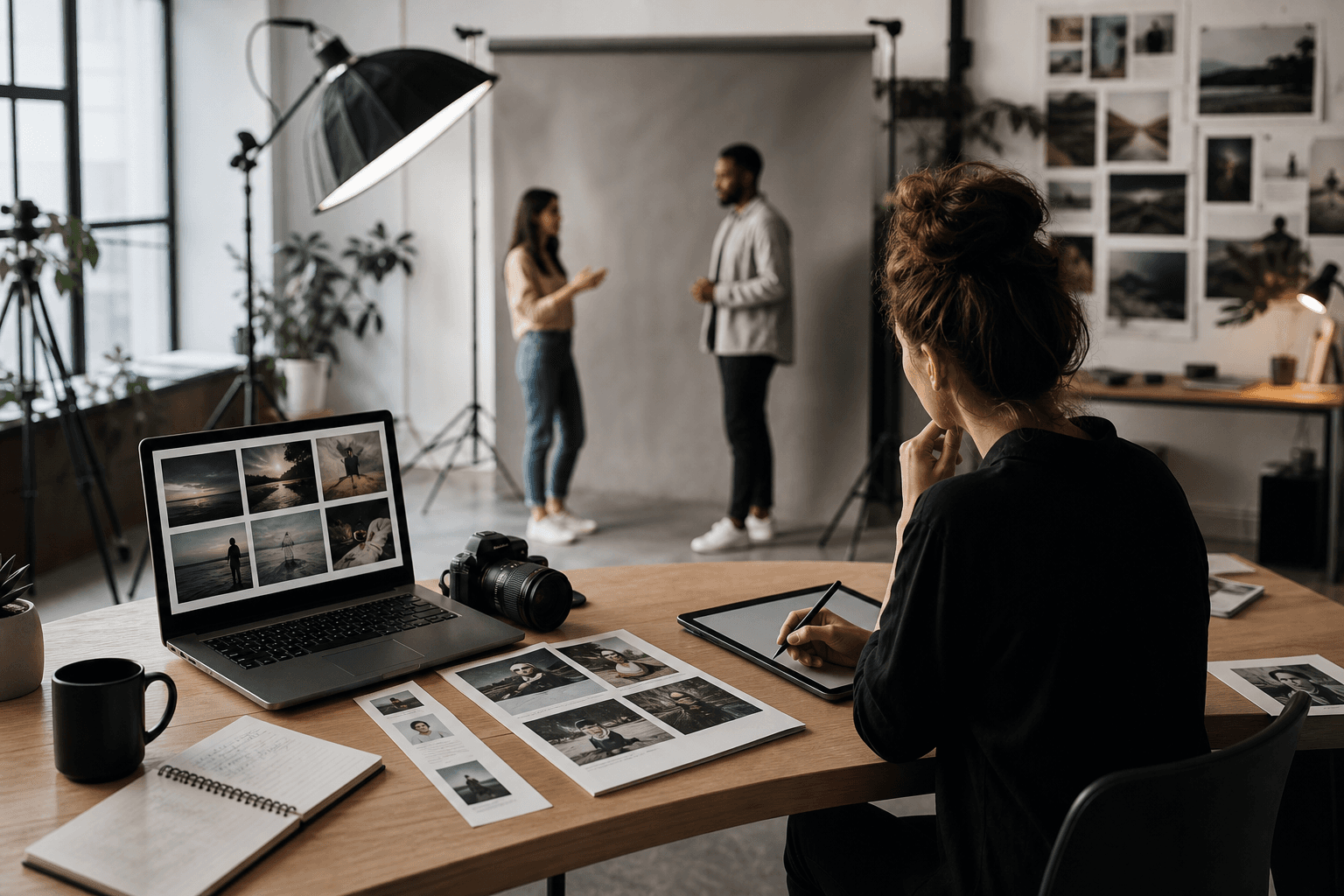

Brand storytelling visuals are intentional photos and videos that show who you are, what you do, and why it matters. When planned correctly they turn one-off images into a recognisable series that supports business goals such as increased listing enquiries, more reservations, or higher social engagement. Visuals work quickly: research on visual storytelling explains how images and video communicate context and emotion faster than text, so a coherent visual approach helps people remember your message and choose your brand over competitors (visual storytelling research).
Step 1: define your story, audience and measurable goals
Before you book a shoot, decide one clear narrative line, the target audience, and two to three measurable goals. Examples:
- Realtor listing: Narrative "first morning light" focusing on lifestyle, audience buyers aged 30 to 55, goals are qualified enquiries and online saves.
- Restaurant promo: Narrative "handcrafted, local" highlighting provenance, audience neighbourhood diners, goals are reservation clicks and social shares.
- Small retail brand: Narrative "trustworthy quality" showing craft and people, audience repeat local customers, goals are website product views and in-store visits.
Writing one-line story briefs keeps the shoot focused. If you want help deciding whether to invest in larger brand work, review resources on visual identity and business branding such as "Brand Identity: Look More Legit and Stand Out" on the Silver Valley Studios site.
Step 2: pick formats and deliverables that match each goal
Match objectives to formats. A mix of hero photography, cinematic video, short-form vertical edits, drone establishing shots, and 2D floorplans lets you tell the story at different scales and platforms. For example, hero HDR photos and a 30 second cinematic tour help property listings present premium features, while 15 second vertical edits increase reach on Instagram and TikTok. Industry guidance shows that combining formats lets brands explain context and values rather than just showing a product (visual strategy guide), and video concept lists demonstrate how short-form cuts drive engagement when paired with hero assets (video concept bank).
Basic deliverable checklist to request from a full-service studio like Silver Valley Studios:
- Photography: 12 to 30 HDR-processed images, hero crops, and web-optimised JPEGs.
- Video: one 30s cinematic tour, one 60s walkthrough, raw 4K masters and a web-ready H.264/HEVC file.
- Social: two to four vertical 9:16 edits (15s and 30s), one 6s story cut.
- Drone: one 10 to 20 second establishing shot plus stills where allowed.
- Floorplans: 2D plan file suitable for MLS and listing pages.
Step 3: build a shoot brief and exact shot lists

A good shoot brief tells the studio what to capture, why, and where to place emphasis. Include the one-line narrative, target audience, deliverable list and shot order, plus timing, props, and key people. For consistency, plan a visual theme such as natural light, muted tonal palette, or candid staff moments and ask the studio to follow it across photos and video. Visual storytelling guides stress that a repeated theme across posts builds recognition, so think series rather than single images (consistency and episodic posts).
Below are plug-and-play shot lists you can paste into a brief. Each list is ordered so the studio can work efficiently on the day and deliver consistent media across platforms.
Realtor shot list and social cuts
- Exterior hero: wide shot at golden hour, alternate twilight skyline.
- Drone establishing: 10 to 20 second pull-back showing property and neighbourhood.
- Entry flow: door, foyer, and sight-lines showing circulation.
- Kitchen hero: wide, island detail, ingredient/hand shot for lifestyle.
- Living flow: sequence of 3 images showing natural paths through space.
- Master suite: hero, ensuite details, natural light on bed.
- Neighbourhood lifestyle: cafe front, park, transit node for context.
- Video: 30s cinematic tour following a natural walk-through, steady gimbal, ambient sound bed.
- Social verticals: 15s hook (exterior to kitchen cut), 6s story cut (quick room montage).
Deliver these assets for listing pages, social reels and MLS galleries. A combined approach gives you hero shots for static listings and short reels for shareable discovery.
Restaurant shot list and short promo scripts
- Hero dish: plated from 3 angles, close-up texture, ingredient b-roll.
- Action shots: chef plating, bartender pouring, hands seasoning.
- Dining room ambiance: tables, lighting, customers in natural moments.
- Staff portrait: owner or chef with short caption idea for social.
- Promo video: 30s menu highlight with ambient music and three plated close-ups.
- Reels: 15s chef-in-action reel with text overlay "Tonight: [Feature Dish]", 6s story cut for reservation CTA.
Small business shot list and episodic social plan
- Post 1: Behind the scenes short, 10 to 20 second vertical showing craft or prep.
- Post 2: Customer in context hero photo, caption-ready for testimonials.
- Post 3: Product in use vertical, 15s, with simple call to action and taglines.
- Repeatable series: reuse the same three themes weekly to build recognition and a stable feed.
Shot ordering matters for efficiency. Start with quieter, staged hero photos then move to action and candid b-roll. That way the space and staff warm into the shoot and you avoid interrupting service or traffic.
Step 4: scheduling, on-site prep and local considerations in Greater Vancouver
Plan shoot windows around light and business rhythms. For interiors, natural light windows are best, so mid-morning or late afternoon often works. For exterior real estate hero shots book golden hour if possible. For restaurants schedule editorial food prep before service or reserve a quiet service hour. Silver Valley Studios serves Maple Ridge and the wider Lower Mainland and Vancouver Island, so discuss travel time and daylight windows with the studio when booking (Silver Valley Studios services).
On-site prep checklist:
- Declutter surfaces and test lighting a day before the shoot.
- Prepare a prop list and any branded items you want in frame.
- Confirm parking and access, and whether client or staff will be present for lifestyle shots.
- For drone shots, confirm no-fly restrictions with local authorities and be ready to provide clear access to outdoor areas; the studio will advise on feasibility.
Step 5: post-production, deliverable formats and licensing to request

Agree on deliverable formats and revision rounds before the shoot so post-production runs smoothly. Typical technical deliverables to request:
- Photos: high-resolution TIFF or JPEG masters plus web-optimised JPEGs sized for listing galleries and social.
- Video masters: 4K H.264 or HEVC masters, web-ready MP4 exports for 1080p and vertical 9:16 versions.
- Social cuts: 9:16 vertical edits at 15s and 30s, and a 6s story version.
- Floorplans: layered PDF and PNG versions for MLS and print.
Licensing to confirm in writing: where you may use the images and video, whether usage is exclusive or non-exclusive, and any time limits on social or advertising use. Discuss revision rounds and turnaround expectations up front. Silver Valley Studios publishes service details and turnaround guidance on their site; use that as a reference when setting expectations (Silver Valley Studios).
Step 6: measure impact, iterate and the exact questions to ask before you book
Simple metrics to track that tie back to your original goals:
- Listings: number of qualified enquiries, saves, click-throughs to virtual tours.
- Restaurant: reservation clicks, online ordering views, and direct messages attributed to posts.
- Social: video retention, shares, and follower growth after a content series.
Decision checklist and vendor questions to use when comparing studios:
- Do you provide a shoot brief review and a written deliverable list? Ask for a sample brief.
- What are your typical turnaround times for photos, full video masters, and social edits?
- Which file formats and aspect ratios are included, and how many revision rounds are in the price?
- Can you supply drone footage and are there any local restrictions we should know about?
- Do you offer a style guide or brand-consistency notes so multiple shoots match over time?
Use those answers to compare providers on clarity and fit rather than price alone. Studio teams that explain their process and follow a brief will reduce back-and-forth and speed delivery.
Common objections and short answers
Turnaround time: Most studios will offer standard and rush options. Ask for concrete delivery windows during the booking conversation and confirm them in writing.
Vertical edits and social deliverables: Yes, they should be part of the package. Short-form concepts and vertical 9:16 cuts are standard for modern campaigns and can be created from the same footage as the cinematic tour (video examples).
Ownership and licensing: Request a written usage licence that specifies online, MLS, advertising and print rights. Studios typically retain raw masters unless otherwise agreed.
Drone availability: Drone coverage can add location context but depends on local rules, weather and permissions. Confirm feasibility with your studio during booking and plan alternative establishing shots if required.
Frequently asked questions
How long does a typical shoot take and when will I receive final files?
Typical shoots range from one hour for a small retail profile to two to four hours for a full real estate package including drone and video. Final delivery windows depend on scope and post-production, but studios often deliver photos within 24 to 72 hours and video masters within 5 to 10 business days. Confirm exact timings when you request a quote.
Can I get vertical social edits and how many variations should I request?
Yes. Request at least two vertical variations per video: a 15 second hook and a 30 second story. Add a 6 second cut for story use. These versions make the same footage work across Reels, TikTok and Stories.
Who owns the images and what usage rights should I ask for?
Ownership terms vary. Ask for a broad, non-exclusive licence covering web, social, MLS, and local advertising. If you need exclusivity or longer-term rights, put that in the contract before the shoot.
Do you provide drone footage and what local approvals should I check?
Many studios offer drone services, but flights depend on local regulations, weather and proximity to airports. Ask the studio to confirm whether permits or site approvals are required for your address and, if needed, to propose a ground-level alternative.
How much lead time do you need for a last-minute listing or restaurant promo?
Lead time depends on the studio schedule. If you have a last-minute need, contact the studio directly and ask about rush availability. Be prepared to prioritise the highest-value deliverables and to accept limited post-production choices to meet tight deadlines.
Key takeaway: planning brand storytelling visuals means choosing one clear narrative, matching formats to goals, preparing an ordered shoot brief, and agreeing deliverables and licences up front. That approach saves time on shoot day and makes the final content perform consistently across listings, websites and social channels.
Ready to review a shoot brief or get pricing? Visit Silver Valley Studios Inc. to book a discovery call?