

Why a real estate drone shots checklist matters
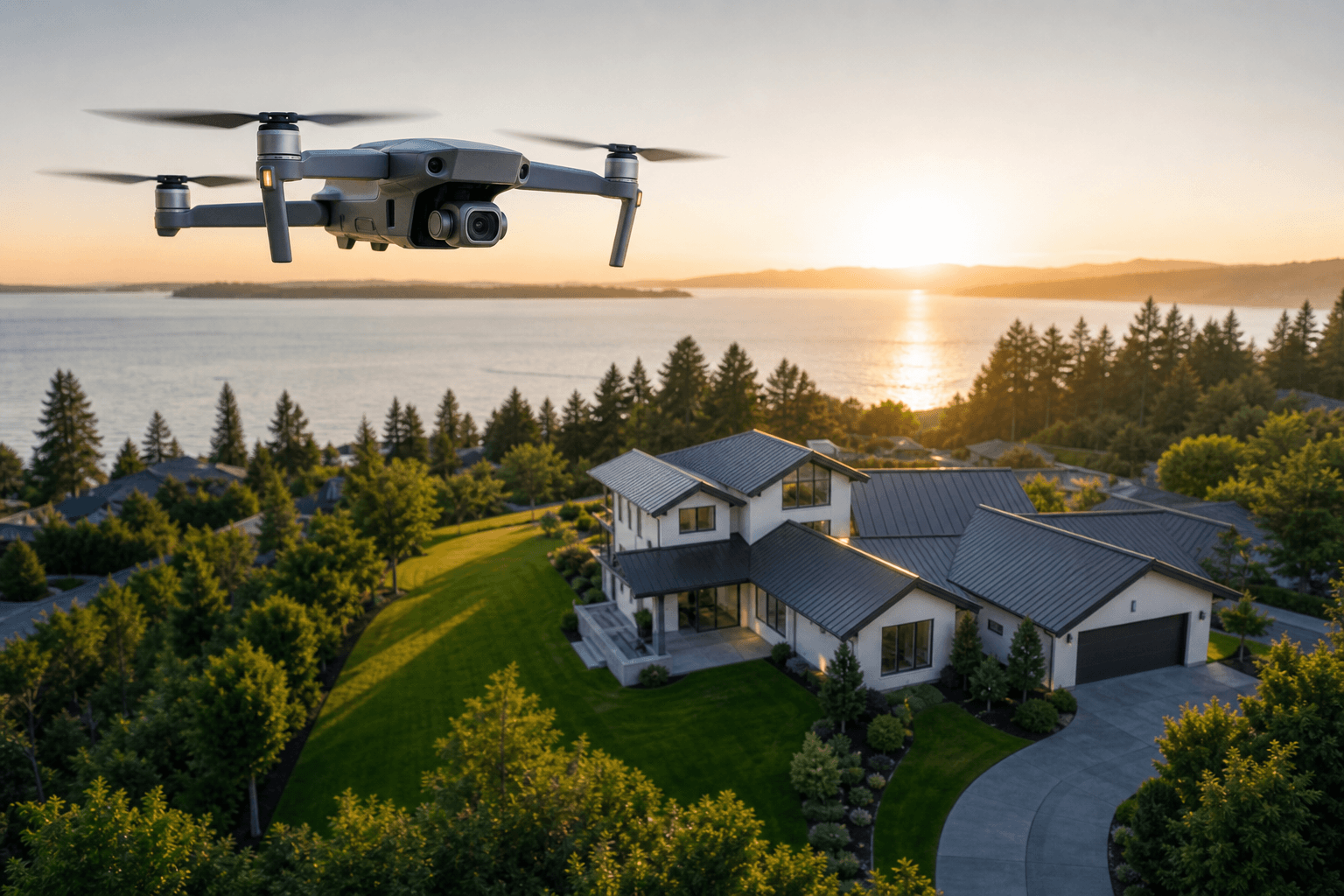
Use a concise real estate drone shots checklist to guarantee consistent aerial assets that show lot size, setting and lifestyle at a glance. A short, repeatable flight that captures seven focused frames delivers both marketing context and cinematic clips agents use for listings, social edits and video tours. Technical references such as Rotate's drone photography guide and Bright-Shot's aerial guide demonstrate how each frame is typically shot and why editors rely on these angles.
The seven essential drone shots to include
1. Pulled-back context shot (establishing view)
What it is: a higher, pulled-back frame showing the full lot, adjacent yards and access routes. Why it matters: buyers judge lot size and setting quickly, and this shot answers those questions at a glance.
How to execute: climb to a moderate altitude and move backward until the entire property, driveway and approach fit comfortably in frame. Capture several exposures if you plan to pull stills from video.
Quick prep and what to expect: clear hoses, potted plants and visible tools; remove cars from the driveway where possible. Visionair's property prep checklist recommends these 24 to 48 hour tasks to help exteriors read cleanly.
2. Fly-up-and-back front reveal
What it is: a cinematic motion shot that starts close to the house and flies backward while rising, revealing the facade, entry and landscaping. Why it matters: this movement communicates approach and curb appeal in a single pass.
How to execute: start low near the front walkway, then steadily rise and retreat in one smooth pass. Keep speed slow enough to capture usable frames for both stills and video edits and avoid sudden acceleration.
Quick prep and what to expect: tidy front steps and porch decor, hide small items and plan to park vehicles out of sight for the duration of the pass.
3. 45° elevated exterior angles (architectural highlights)
What it is: angled aerial frames shot roughly at a 45 degree tilt that reveal rooflines, building materials and proportions. Why it matters: these frames communicate construction quality and scale better than straight-on or pure top-down angles.
How to execute: position the drone on several sides of the property at a 45 degree tilt, capturing the roof and facades without compressing perspective. Shoot at different heights so editors can pick the best crop for listing galleries.
Quick prep and what to expect: remove ladders, tarps and visible debris from exterior walls and roof edges before the shoot so the 45 degree angles show finished materials clearly.
4. Low orbital pass (dynamic cutaway)
What it is: a smooth circle or arc around a focal feature, such as a backyard, pool or terrace. Why it matters: orbital passes provide motion-rich b-roll that editors use for cinematic property tours and short social clips.
How to execute: set a steady radius and speed that keep the feature framed steadily as the drone orbits. Maintain a safe clearance from trees and lines and prioritise a steady gimbal for smooth footage.
Quick prep and what to expect: ask occupants to clear patios, close doors and bring pets indoors so the footage focuses on built features and feels uninterrupted.
5. Top-down birds-eye (site plan and outdoor spaces)
What it is: a vertical, overhead frame that maps usable yard, pool footprints, roof condition and hardscape relationships. Why it matters: this perspective functions like a simplified site plan and helps buyers assess outdoor living quickly.
How to execute: hover directly over the centre of the lot or feature at a height that fits the entire yard or element in frame. Capture raw stills and a stabilized video frame to use as annotated site maps in marketing material.
Quick prep and what to expect: tidy toys, hoses and garden tools the day before and present pool covers and safety features neatly for a clean overhead read.
6. Pulled-away contextual shot (neighbourhood and approach)
What it is: a farther-distance frame that places the property within its immediate neighbourhood or shows view corridors such as parks, water or mountains. Why it matters: location sells; this frame highlights nearby amenities and the property’s orientation within the neighbourhood.
How to execute: gain altitude and pull back until streets, parks or waterfront context are visible but the subject property remains identifiable. Time the shot to avoid busy roads to keep the scene calm.
Quick prep and what to expect: discuss privacy with neighbours if the flight will show nearby private spaces, and let your operator know of any local sensitivities before takeoff.
7. Golden-hour exterior and feature close-ups
What it is: short passes during the warm light of sunrise or sunset, plus tighter aerial detail shots on rooftop decks, pools, or water views. Why it matters: golden-hour light adds warmth and emotional appeal and often increases click-through rates for listings.
How to execute: schedule brief morning or evening passes and capture both sweeping exterior passes and tighter feature frames while the light is favourable. Keep flights focused so you can capture several assets within the short golden-hour window.
Quick prep and what to expect: confirm access and timing with the on-site contact, and be prepared to pause interior activity so exteriors are ready when the light is best.
Quick property prep and operator brief (printable checklist)
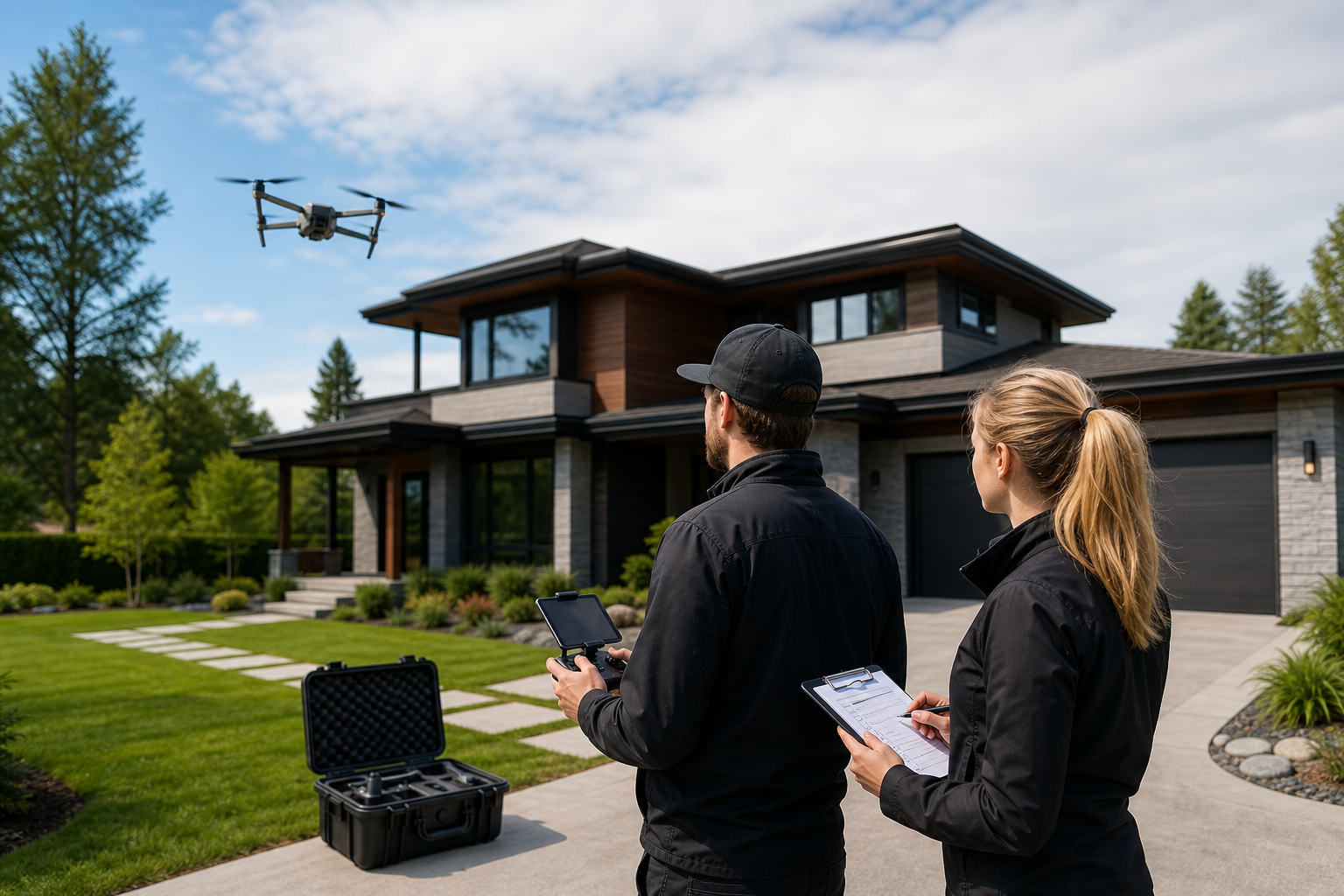
Property prep: 24 to 48 hours before the shoot
- Mow and water grass, trim hedges, rake leaves and tidy garden beds, following Visionair's exterior prep checklist.
- Remove hoses, tools, toys and visible building materials from yards and driveways.
- Wash terraces, driveways and sun-facing windows for cleaner reflections in aerial frames.
- Park vehicles out of the main view and hide personal items from patios and porches.
- Confirm key selling points with the operator so they know focal areas before arrival.
Day-of shoot checklist
- Ensure someone on site can unlock gates and provide access to the best takeoff area.
- Keep pets and people clear of the yard during flights for safety and continuity.
- Confirm no temporary scaffolding, ladders or unsecured items are within flight paths.
- Provide a neutral landing and takeoff zone, preferably a small cleared lawn or driveway segment.
- Review the operator's shot list and agree on a prioritised order in case weather shortens the session.
Operator brief template: priority shots and shot order
Use this short template when you book or message the operator. Keep it concise so the pilot can file it into a flight plan.
- Property address and primary contact on site.
- Priority shots in order: 1) Pulled-back context, 2) Fly-up front reveal, 3) 45 degree exteriors, 4) Low orbital pass around pool or backyard, 5) Top-down of yard, 6) Pulled-away neighbourhood, 7) Golden-hour passes and detail close-ups.
- Key selling points to highlight, for example view, lot size, rooftop deck, pool or proximity to park.
- No-fly or neighbour sensitivities to note.
- Delivery format expected (high-resolution JPGs, 4K MP4, social edits) and turnaround preference.
Weather, safety and permission notes
Reschedule if sustained winds or heavy rain are forecast. For condo, strata or flights near airports, coordinate permission with property managers and confirm the operator is a licensed RPAS pilot. The operator will follow local regulations and safety checks; consult a licensed operator or Transport Canada guidance for legal specifics rather than relying solely on general advice here.
For practical, local booking and package details that bundle aerials with HDR photos, cinematic video tours and 2D floorplans, see Drone Photography for Property Listings: Boost Views from Silver Valley Studios.
Frequently asked questions
How long does a typical real estate drone shoot take for a house?
A focused drone session that captures these seven shots usually takes 20 to 45 minutes on site, depending on property size, features and whether golden-hour passes are included. Allow extra time for setup, safety checks and any permissions the operator requests.
Do I need permission to fly a drone over a condo, strata lot, or neighbour's property?
Yes. For shared common areas obtain permission from the property manager or strata council. If a flight will pass over neighbouring private property, inform adjacent owners when possible. The pilot must comply with local rules and logistic constraints and will ask you to confirm permission before flying.
When is the best time of day to schedule aerials in Greater Vancouver?
Golden hour around sunrise or sunset gives the most appealing light for exteriors and views. Mid-morning to late afternoon provides even light for architectural detail without harsh shadows. Choose a time that balances lighting needs and agent logistics, and be prepared to shift if weather changes.
What should I include in a short operator brief so we get the shots we need?
Include the property address, on-site contact, the priority shot order above, key selling points to emphasise, any no-fly zones or neighbour concerns, and the delivery formats you need. Keep the brief short so the pilot can add it to the flight plan efficiently.
What files will I receive and how long until delivery?
Deliverables vary by operator and package. Common outputs include high-resolution JPGs, 4K MP4 clips, and short social edits. Confirm exact deliverables and turnaround time with the provider when you book.
Next step: to discuss aerial coverage or a combined property media package contact Silver Valley Studios Inc. at the official website or use the drone coverage page above to request pricing and availability.
Further reading and technical references: Rotate's drone photography guide, Bright-Shot's aerial guide, and Visionair's property prep checklist.
Talk with Silver Valley Studios Inc.
Contact Silver Valley Studios Inc. to ask about the next step and confirm which options fit your needs.